2026-11-11 · Luis Hernandez
Local Guide To Water Damage From Roof Leaks In Newark's Older Homes
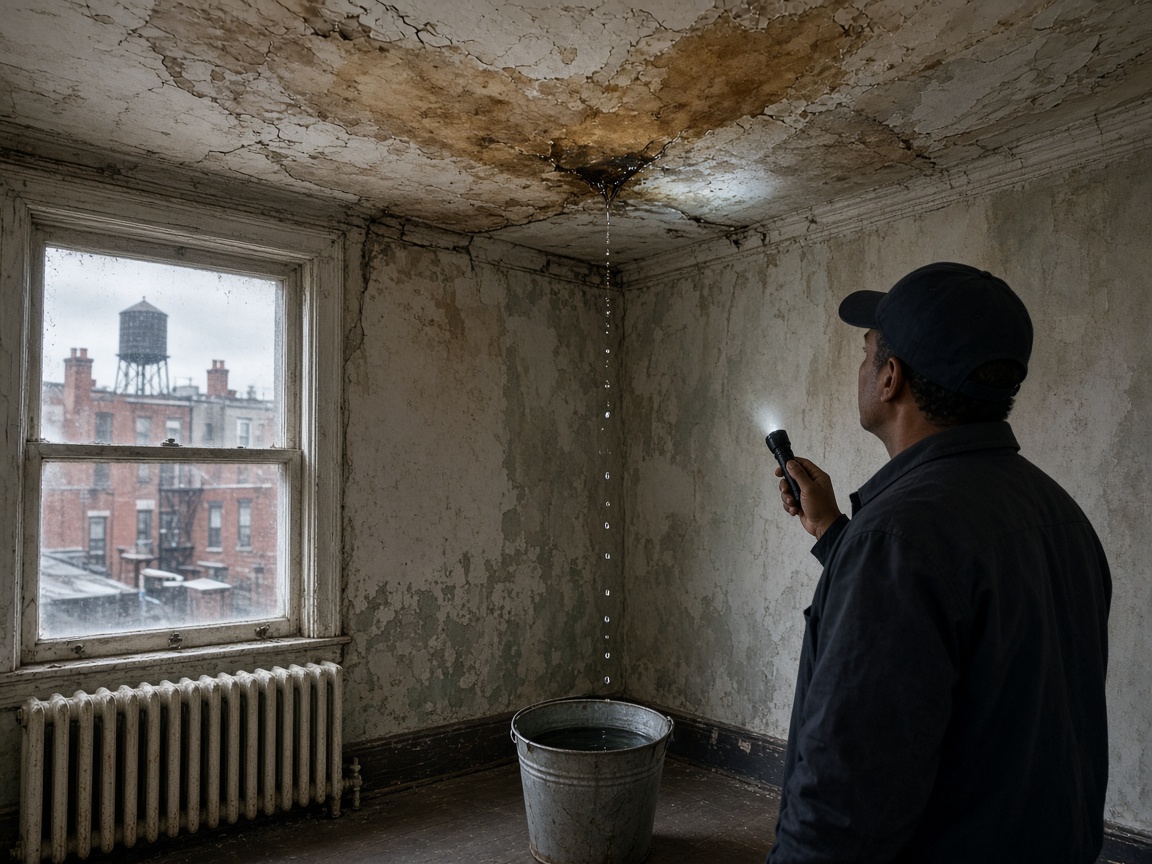
Roof leaks in Newark's older homes typically produce hidden water damage that spreads through plaster ceilings and into lath walls within 48 to 72 hours during humid subtropical summers or after winter ice dams. Homeowners in the Ironbound, North Ward, and Weequahic sections see this pattern most often because many properties date to the 1920s-1940s with original or once-replaced asphalt shingles that now carry 20- to 30-year lifespans.
Common Roof Types and Leak Points in Essex County Older Homes
Most Newark homes built before 1950 use slate, wood shake, or three-tab asphalt shingles over skip-sheathing rather than modern plywood decks. Slate on Central Ward and Vailsburg properties cracks along nail lines after repeated freeze-thaw cycles, while asphalt shingles in University Heights curl and lose granules, allowing water to enter at valleys and chimney flashings. These entry points sit directly above second-floor ceilings in two- and three-family homes, so moisture travels downward through plaster before reaching the first floor.
Downtown Newark and South Ward row houses often share party walls, so a leak on one roof edge can affect the neighboring structure within days. Branch Brook Park area homes sit on slightly higher ground, yet their steeper pitches still collect ice at eaves during cold snaps, pushing water under flashing and into attic insulation.
How Newark Climate and Terrain Affect Roof Leak Damage
Hot summers with frequent thunderstorms followed by cold winters create expansion-contraction stress on older roofing materials across Essex County. Once winter temperatures drop below freezing, any standing water on flat sections or low-slope additions turns to ice, widening gaps at flashing joints. Newark Liberty International Airport flight paths bring vibration that can loosen already compromised slate tiles on nearby South Ward roofs.
The clay-heavy soils around Vailsburg and Weequahic slow drainage after heavy rain, keeping basements damp even when the leak itself is on the second floor. This combination means water damage often appears first as stained ceilings, then as warped floorboards on the level below.
Early Signs and Containment Steps for Newark Homeowners
Look for brown water rings on ceilings in rooms directly under roof valleys, especially after storms. In Ironbound triple-deckers, check third-floor closets and stairwells where leaks travel along shared chimneys. Once you spot discoloration, place plastic sheeting and buckets beneath the stain and move furniture away from affected walls to limit secondary damage to flooring.
Document the location with photos before any cleanup, noting whether the stain grows after rain or during snow melt. These details help when coordinating with a roofer and a restoration crew working on the same property.
When to Call for Water Damage Restoration or Repair
If ceiling plaster softens or insulation in the attic feels wet, contact professionals for Water Damage Restoration before mold sets in. For smaller isolated stains without structural softening, targeted Water Damage Repair may suffice once the roof is fixed. Delaying either step allows moisture to reach electrical boxes or shared walls common in Newark's older multi-family stock.