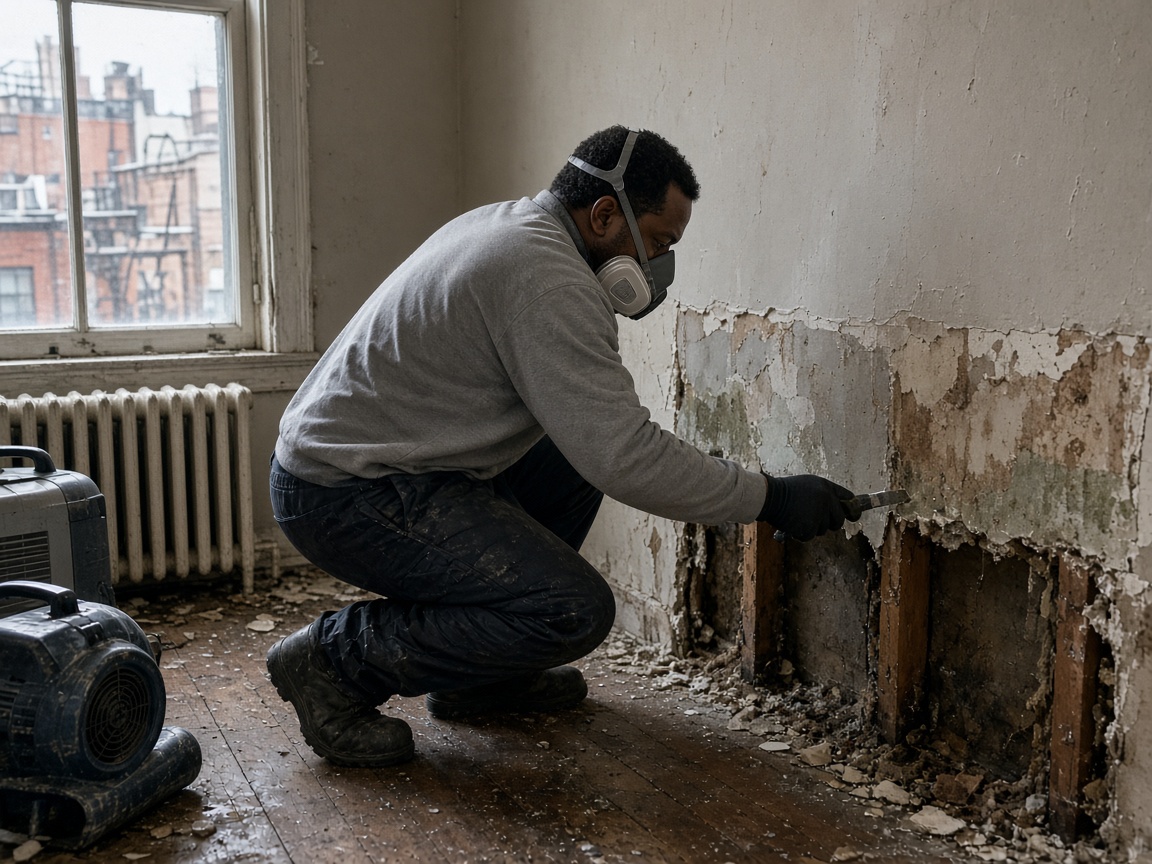
Newark's older brick and plaster homes in Downtown Newark and the North Ward trap moisture behind walls after leaks, especially when cold winters cause pipes to freeze and burst. Water migrates through lath and plaster into joists, requiring targeted demolition and moisture mapping rather than surface drying. Homes near Branch Brook Park often see groundwater seepage during heavy summer rains due to the area's clay-heavy soil and aging sewer lines.
In the Ironbound and University Heights, multi-family buildings with flat roofs face recurring ceiling leaks from clogged drains or ice dams. Technicians must account for shared walls that allow water to travel between units, which can turn a single-unit job into a multi-unit drying project. Proximity to Newark Liberty International Airport increases humidity levels that slow natural evaporation, making professional dehumidification essential to prevent mold in Vailsburg and Weequahic row houses.
South Ward and Central Ward properties built before 1950 frequently have knob-and-tube wiring that must be isolated before any water extraction begins. Technicians check for hidden saturation in hardwood floors and subfloors common in these neighborhoods, using moisture meters to avoid callbacks. Work in these areas also requires coordination with Essex County permitting when structural repairs exceed cosmetic fixes.
Technician insight
In Newark the thing that catches most people out with Water Damage Repair is how quickly water travels through plaster and lathe in pre-1950 homes in the North Ward and Ironbound. Cold winters freeze pipes that run along exterior walls, and once it thaws the water soaks into joists before anyone notices. Homeowners often stop at the visible stain and miss the need to open cavities for proper drying.
Frozen Pipe Leak in North Ward Row House
A homeowner in the North Ward discovered water staining on the first-floor ceiling after a cold snap. Inspection showed a burst pipe had saturated plaster and subflooring across two rooms. Crews extracted water, opened affected walls, and ran drying equipment for four days until readings returned to normal, preventing mold in the shared wall with the neighboring unit.
Water Damage Repair Services We Offer
✓Burst Pipe Water Extraction
Rapid removal of standing water from frozen or corroded pipes common in Newark's pre-war homes, followed by targeted drying to protect plaster and hardwood.
✓Ceiling Leak Repair
Locates and stops leaks from flat roofs or upstairs plumbing in Ironbound and University Heights buildings, then restores damaged drywall and insulation.
✓Basement Flood Cleanup
Extracts water from below-grade spaces in South Ward and Vailsburg homes, addresses sump pump failures, and dries masonry walls to prevent recurring moisture.
✓Emergency Water Removal
24-hour response for sudden flooding near Newark Penn Station and Prudential Center areas, using truck-mounted equipment to limit secondary damage in tight urban lots.
✓Sewage Backup Restoration
Handles contaminated water from aging Essex County sewer lines, with full disinfection and removal of affected materials in multi-unit buildings.
Water Damage Repair Cost in Newark, NJ
| Service | Typical Range | What Affects It |
|---|---|---|
| Emergency water extraction | $600–$1,800 | Depends on volume and access in older Newark homes |
| Full drying and dehumidification | $400–$1,200 | Higher in humid summer months or multi-story buildings |
| Ceiling or wall restoration | $800–$2,500 | Varies with plaster vs drywall and extent of hidden saturation |
| Basement cleanup after flooding | $900–$2,200 | Includes sewage considerations common near older sewer lines |
Ranges are typical for Newark, NJ and confirmed with an exact written quote before any work starts.
How it works
- 1
On-Site Assessment
Technicians inspect affected areas in the specific neighborhood, identify water source, and map moisture using meters suited to Newark's older construction.
- 2
Water Extraction
Remove standing and trapped water with pumps and vacuums before it spreads through shared walls or into subfloors.
- 3
Drying and Dehumidification
Deploy air movers and dehumidifiers calibrated for humid subtropical summers and cold winter conditions to reach safe moisture levels.
- 4
Restoration and Monitoring
Replace damaged materials and monitor readings until the structure is dry, then coordinate any needed repairs with local code requirements.
Pricing
Pricing varies by water volume, affected square footage, and whether hidden damage exists behind plaster or in multi-unit structures.