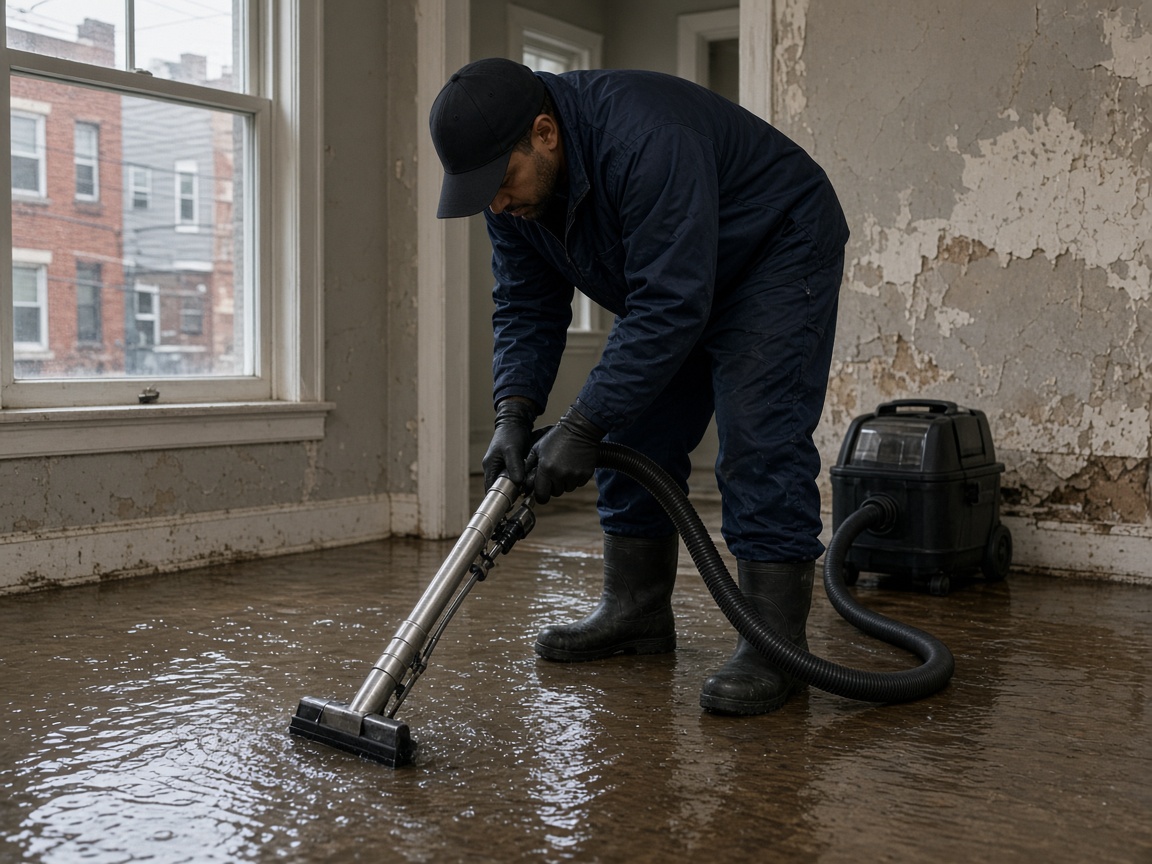
Newark's older housing stock in the Ironbound and North Ward often features slab-on-grade foundations and narrow basements that trap water quickly after a main break or heavy rain. Cold winters cause pipe bursts in unheated crawlspaces while humid summers increase condensation inside walls, so extraction must address both standing water and hidden moisture behind plaster and brick. We use truck-mounted pumps and submersible units sized for the tight access points common on Clinton Avenue blocks and similar streets.
Storm runoff from Newark Liberty International Airport flight paths and the low-lying terrain near the Passaic River can push water into South Ward and Weequahic properties faster than in higher ground near Branch Brook Park. Sewage backups from aging combined sewers in Central Ward require negative-air machines and separate containment to avoid cross-contamination with living spaces. Technicians check for hidden voids under 100-year-old flooring where water migrates toward the foundation wall.
After extraction we document moisture readings on every affected level because Newark's humid subtropical climate lets residual dampness linger in lath-and-plaster walls long after visible water is gone. This step prevents secondary mold growth that insurance adjusters later flag during claims in University Heights and Vailsburg rentals. All work is coordinated from our base at 649 Clinton Ave so crews can return same-day if readings spike overnight.
Technician insight
In Newark, the thing that catches most people out with Emergency Water Removal is how clay soil in the South Ward and Weequahic holds water against 1920s foundations long after rain stops, so extraction alone never finishes the job without extended drying runs.
Ironbound Main Line Break
Water from a first-floor supply line spread under the slab of a 1930s Ironbound row house and reached the neighboring unit. We extracted the visible water, located trapped moisture behind the brick party wall, and ran drying equipment for three days until readings stabilized across both properties.
Emergency Water Removal Services We Offer
✓Burst Pipe Water Extraction
Rapid removal of water from supply line failures common in pre-war Newark homes before walls and floors are opened for drying.
✓Basement Flood Extraction
Pumping and hauling standing water from below-grade spaces in Ironbound row houses and South Ward properties after heavy rain or river backup.
✓Sewage Backup Removal
Containment and extraction of contaminated water from combined sewer overflows that affect Central Ward and Weequahic blocks during storms.
✓Appliance Leak Extraction
Targeted cleanup from water heater or washing machine failures that spread across finished basements in University Heights apartments.
✓Roof Leak Emergency Removal
Immediate ceiling and attic water removal after ice dam or flashing failures during Newark's cold winter cycles.
Emergency Water Removal Cost in Newark, NJ
| Service | Typical Range | What Affects It |
|---|---|---|
| Small residential extraction under 500 sq ft | $350–$750 | Higher when water reaches subfloor in pre-1940 homes |
| Basement flood pumping | $600–$1,400 | Varies with depth and need for sewage-rated equipment |
| Multi-room extraction after pipe burst | $800–$2,200 | Driven by number of levels and hidden voids in plaster walls |
| Daily monitoring and equipment | $150–$300 per day | Continues until dry standards are met in humid Newark summers |
Ranges are typical for Newark, NJ and confirmed with an exact written quote before any work starts.
How it works
- 1
On-Site Assessment
Technician arrives from Clinton Ave, maps water migration through Newark's older foundations, and records moisture levels on every affected surface.
- 2
Water Extraction
Industrial pumps and wands remove standing water while protecting hardwood floors and plaster common in Ironbound and North Ward homes.
- 3
Hidden Moisture Detection
Infrared scans locate trapped water behind walls and under slabs that would otherwise remain after visible extraction in humid Essex County conditions.
- 4
Drying Setup And Monitoring
Air movers and dehumidifiers are placed, with daily return visits scheduled until readings meet industry dry standards for the neighborhood.
Pricing
Cost depends on water volume, depth, and access constraints typical of Newark's older housing; estimates provided on-site during business hours.