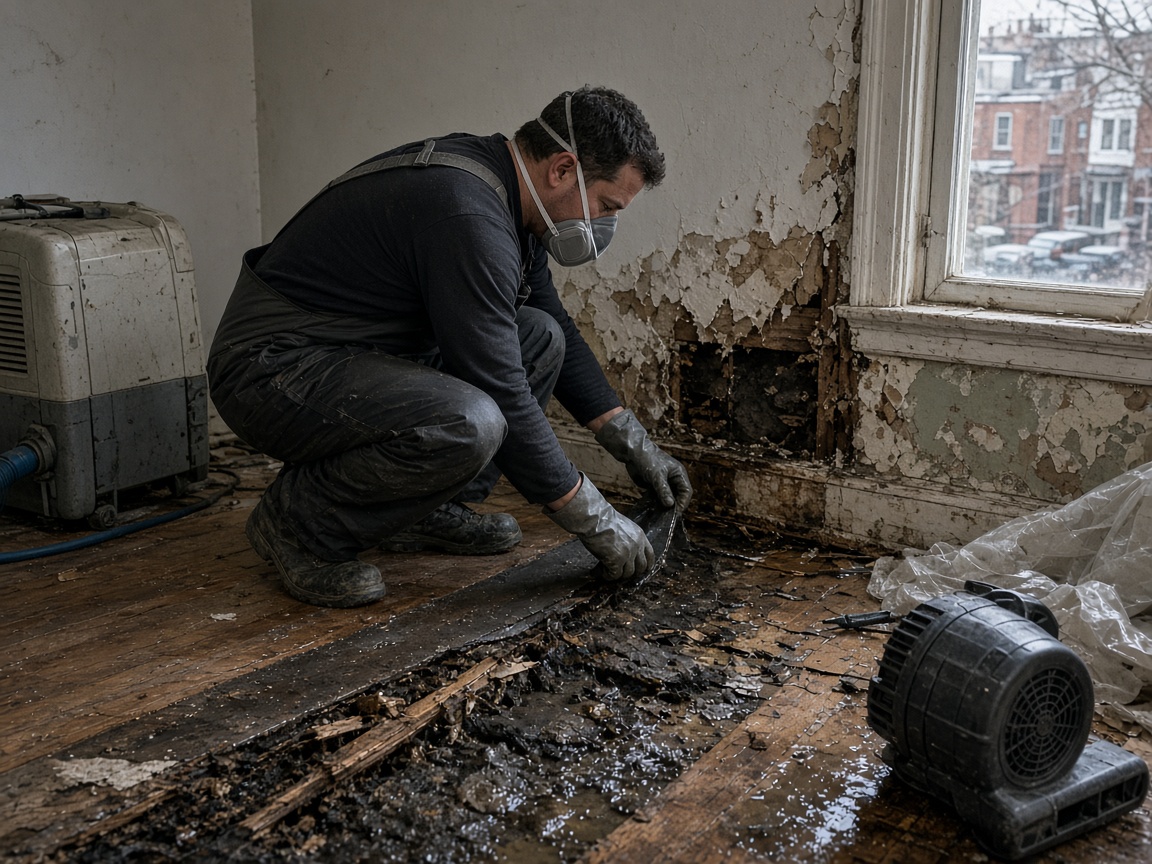
Newark’s older housing stock in neighborhoods like the Ironbound and Vailsburg often features plaster walls over lath and narrow basements that trap water after heavy summer storms or winter pipe bursts. Cold winters send temperatures well below freezing, forcing expansion in uninsulated supply lines inside brick row homes, while the humid subtropical summers keep moisture levels high enough that hidden pockets can grow mold within days. Technicians must pull baseboards and drill inspection holes to confirm drying behind layers that newer construction rarely has.
Jobs near Newark Penn Station or the North Ward frequently involve multi-unit buildings where water migrates through shared walls and floors, requiring coordination with building management and Essex County code requirements for electrical shutoffs. Sewage backups after heavy rain are common in low-lying sections near the Passaic River; these demand full containment, HEPA air scrubbing and disposal of porous materials rather than simple drying. Homeowners who attempt DIY fans often push moisture into joist cavities, turning a contained loss into a full floor replacement.
Airport-area properties in the South Ward see occasional roof leaks from wind-driven rain during coastal storms, and the clay-heavy soil around Weequahic slows drainage, keeping foundations wet longer. Restoration crews document every step with moisture meters and thermal imaging because insurance adjusters in Newark require proof that all affected materials reached acceptable drying standards before any reconstruction begins.
Technician insight
In Newark the thing that catches most people out with water damage restoration is the plaster and lath in pre-1940 row homes in the North Ward and Ironbound; once water sits behind those layers, cheap box fans never reach it and mold spreads into the next unit before anyone notices.
Winter Pipe Burst in Vailsburg
A frozen supply line burst in a 1920s two-family home near Weequahic Park, sending water through the first-floor ceiling into the basement. Crews found saturated plaster and insulation hidden inside the exterior wall. Extraction and targeted drying prevented mold growth, and only two sections of wall needed replacement instead of the entire room.
Water Damage Restoration Services We Offer
✓Emergency Water Extraction
Rapid removal of standing water from basements and first floors in Newark row homes using truck-mounted pumps sized for tight access points common in the Ironbound.
✓Structural Drying and Dehumidification
Industrial drying of plaster, lath and hardwood floors in older Newark properties where standard box fans fail to reach wall cavities.
✓Basement Water Damage Repair
Repair of foundation leaks and slab moisture common in Vailsburg and South Ward homes built on clay soil that holds water after storms.
✓Sewage Cleanup and Sanitation
Full containment and disinfection after backups that frequently affect low-lying blocks near Branch Brook Park during heavy Essex County rains.
✓Mold Remediation After Water Damage
Removal of hidden growth behind walls in humid Newark summers, especially in University Heights apartments where ventilation is limited.
✓Ceiling and Wall Restoration
Replacement of water-stained plaster and drywall in multi-story homes near Prudential Center where leaks travel through shared ceilings.
Water Damage Restoration Cost in Newark, NJ
| Service | Typical Range | What Affects It |
|---|---|---|
| Water Extraction | $250–$900 | Higher in multi-unit buildings or when sewage is involved. |
| Drying Equipment Rental (per day) | $150–$400 | Longer runs needed in humid summer months. |
| Basement Drying Package | $800–$2,200 | Varies with square footage and soil moisture in South Ward. |
| Mold Remediation Add-On | $600–$1,800 | Required when growth is found behind plaster in Ironbound homes. |
Ranges are typical for Newark, NJ and confirmed with an exact written quote before any work starts.
How it works
- 1
On-Site Assessment
Technician inspects all affected rooms, checks neighboring units in Newark row homes, and uses moisture meters to map hidden water.
- 2
Water Removal
Pumps and extractors clear standing water from basements and crawl spaces typical of older Essex County properties.
- 3
Drying And Monitoring
Air movers and dehumidifiers run until readings meet industry standards, with daily checks to prevent mold in Newark’s humid summers.
- 4
Restoration And Repairs
Replace damaged materials, match original plaster or flooring finishes, and return the home to pre-loss condition.
Pricing
Upfront quotes after inspection; final cost depends on extent of hidden damage in older Newark construction.