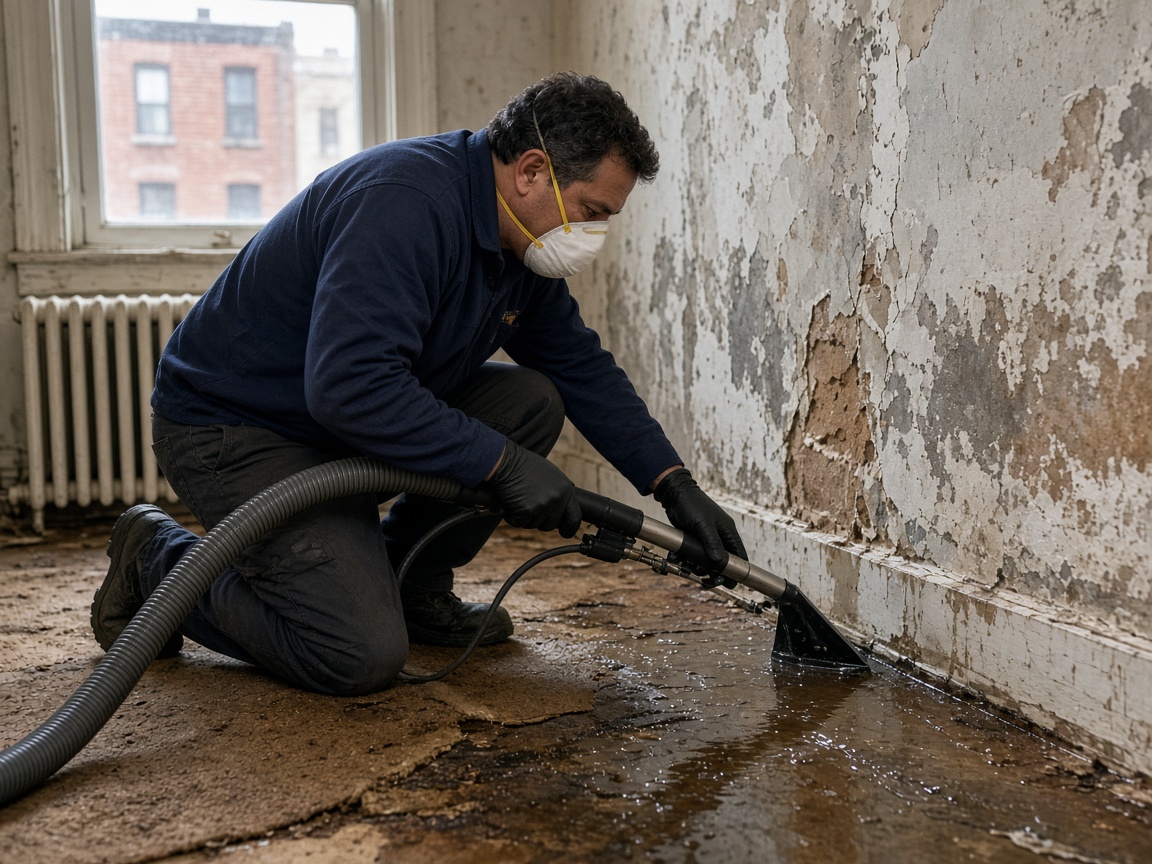
Newark's older housing stock in the North Ward and Weequahic often features plaster walls and balloon framing that trap moisture behind layers, requiring targeted demolition and moisture mapping before drying begins. Cold winters cause supply lines to freeze and burst in unheated basements common to Vailsburg and Central Ward homes, while humid summers accelerate mold growth once water sits. Crews at 649 Clinton Ave respond to calls from Downtown Newark and University Heights where tight row-house layouts limit equipment placement and extend drying times.
Properties near Newark Liberty International Airport and the Ironbound face higher groundwater intrusion during heavy rain because of the area's flat terrain and older combined sewer systems. Restoration here routinely includes sewage cleanup when floodwater mixes with street runoff, followed by antimicrobial treatment on subfloors. Technicians also address water that migrates into commercial spaces around the Prudential Center and New Jersey Performing Arts Center, where concrete slab construction hides moisture that later damages tenant finishes.
South Ward and East Orange border homes frequently see attic leaks from ice dams after cold snaps, requiring insulation removal and ventilation checks before re-insulation. Restoration crews coordinate with local code requirements for electrical safety in flooded spaces and document hidden damage for insurance adjusters serving Jersey City and Elizabeth commuters. Every job starts with a site visit from the Clinton Avenue base to confirm scope before equipment is staged.
Technician insight
In Newark the thing that catches most people out with water damage restoration is how quickly moisture travels through the balloon framing and plaster in North Ward and Weequahic homes once a pipe bursts during a cold snap; you have to open walls early or hidden mold shows up months later.
Winter Pipe Burst in North Ward Row House
A supply line froze and burst in a 1920s North Ward basement during a January cold snap, sending water across the dirt floor and into plaster walls. Extraction removed several inches of standing water, then drying equipment ran for five days while crews removed saturated plaster to prevent mold. The space was returned to the owner with new base trim and verified dry readings before the weekend.
Water Damage Restoration Service Services We Offer
✓Emergency Water Extraction
Rapid removal of standing water from basements and first floors using truck-mounted pumps suited to Newark row-house access limits.
✓Structural Drying and Dehumidification
Industrial air movers and dehumidifiers placed to pull moisture from plaster, lath, and hardwood in older Essex County homes without warping floors.
✓Sewage Cleanup and Sanitation
Safe extraction and disinfection of contaminated floodwater common after combined sewer backups in the Ironbound and South Ward.
✓Basement Flood Restoration
Full cleanup of finished and unfinished basements in North Ward and Vailsburg properties hit by winter pipe bursts or heavy rain.
✓Ceiling and Wall Water Damage Repair
Targeted removal of saturated drywall and plaster followed by drying and replacement in tight Downtown Newark and University Heights layouts.
✓Attic Water Damage Restoration
Ice-dam and roof-leak cleanup including insulation removal and ventilation restoration for Weequahic and Central Ward homes.
Water Damage Restoration Service Cost in Newark, NJ
| Service | Typical Range | What Affects It |
|---|---|---|
| Emergency water extraction | $600–$1,800 | Varies with depth and access in older basements |
| Full structural drying package | $800–$2,500 | Includes equipment and daily monitoring |
| Sewage-affected cleanup | $1,200–$3,000 | Adds sanitation and disposal steps |
| Attic or ceiling repair after leak | $450–$1,400 | Depends on insulation and plaster extent |
Ranges are typical for Newark, NJ and confirmed with an exact written quote before any work starts.
How it works
- 1
On-Site Assessment
Technician inspects affected areas, maps moisture with meters, and identifies hidden damage in Newark's older construction.
- 2
Water Removal
Extraction equipment removes standing water while protecting adjacent rooms in dense row-house settings.
- 3
Drying And Monitoring
Air movers and dehumidifiers run with daily moisture checks until materials reach safe levels.
- 4
Restoration And Cleanup
Repairs, antimicrobial application, and final walkthrough before returning the space to use.
Pricing
Upfront quotes provided after inspection; final cost depends on water category, affected square footage, and materials.