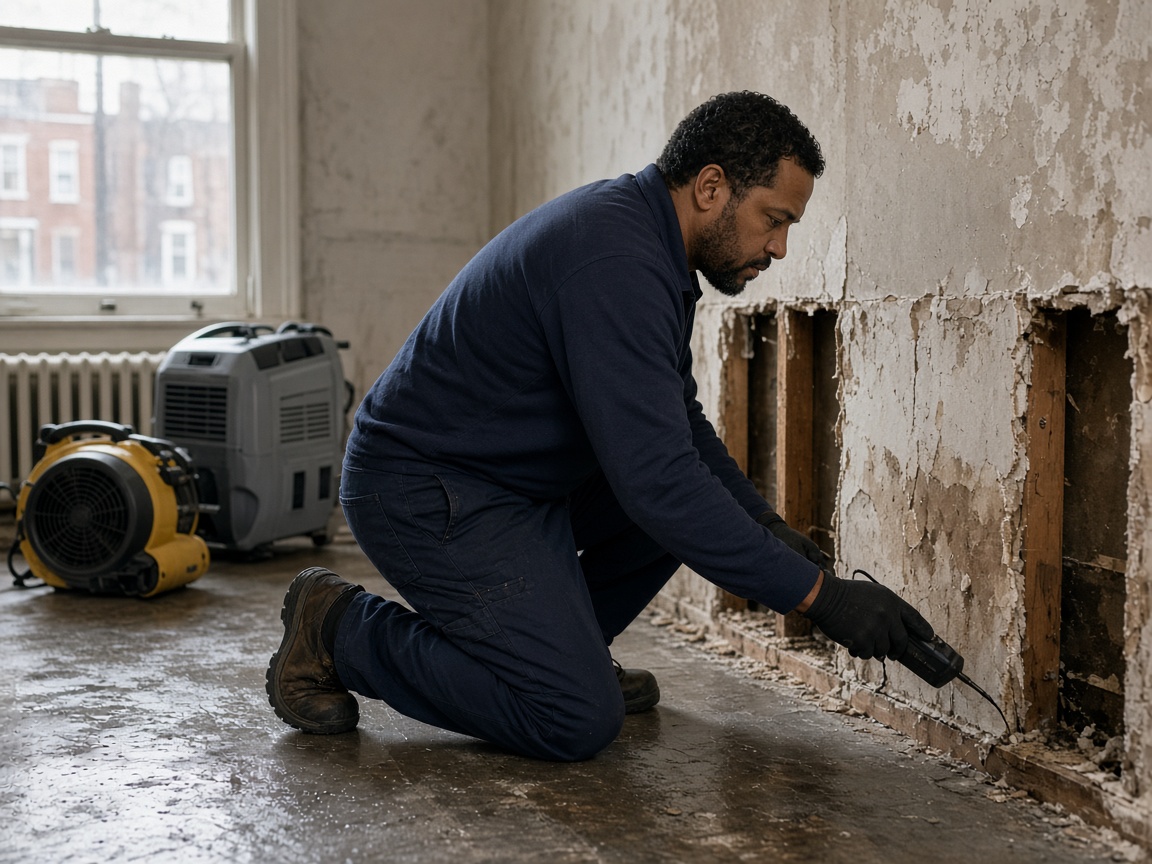
Roselle Park homes often sit on narrow lots along streets like Sherman Avenue and Westfield Avenue, where older plumbing and tight driveways limit equipment access during water extraction. Our crew from 649 Clinton Ave responds to calls in this Union County pocket by staging smaller pumps and dehumidifiers first, then moving larger drying units once we clear the property line.
Winter freezes and summer humidity both hit Roselle Park hard because many houses date to the 1920s with original cast-iron lines that crack when temperatures swing. We route through local side streets to reach properties near the Elizabeth border quickly, keeping disruption low for residents who commute via NJ Transit from Roselle Park station.
When storms push water toward the Elizabeth River corridor, basements along those blocks fill fast. We focus on targeted removal and moisture mapping so drywall and flooring in these compact homes can be dried without unnecessary demolition.
Around Roselle Park
We regularly work near:
- 📍Acker Park
- 📍Roselle Park High School
- 📍Sherman Avenue
- 📍Westfield Avenue
- 📍Roselle Park Public Library
Water Damage Restoration in Roselle Park — Local Notes
- •Narrow lots along Sherman and Chestnut Streets require compact extraction gear because standard trucks cannot turn around in many driveways.
- •1920s-era homes near Roselle Park High School commonly have knob-and-tube wiring and cast-iron drains that complicate drying after pipe bursts.
- •Proximity to the Elizabeth River means groundwater seepage after heavy rain, so we always check slab edges on properties east of Westfield Avenue.
- •Cold snaps in winter reach older uninsulated basements faster here than in newer Newark subdivisions, raising the chance of sudden leaks during January thaws.