Orange sits just west of central Newark with a mix of early-1900s wood-frame houses and brick two-families along Lincoln Avenue and Valley Road. Narrow lots and shared driveways mean our crews often stage equipment on the street and run extraction hoses through side yards to reach basements that sit below grade. We keep a truck at 649 Clinton Ave so we can reach Orange addresses inside thirty minutes when pipes burst during January cold snaps.
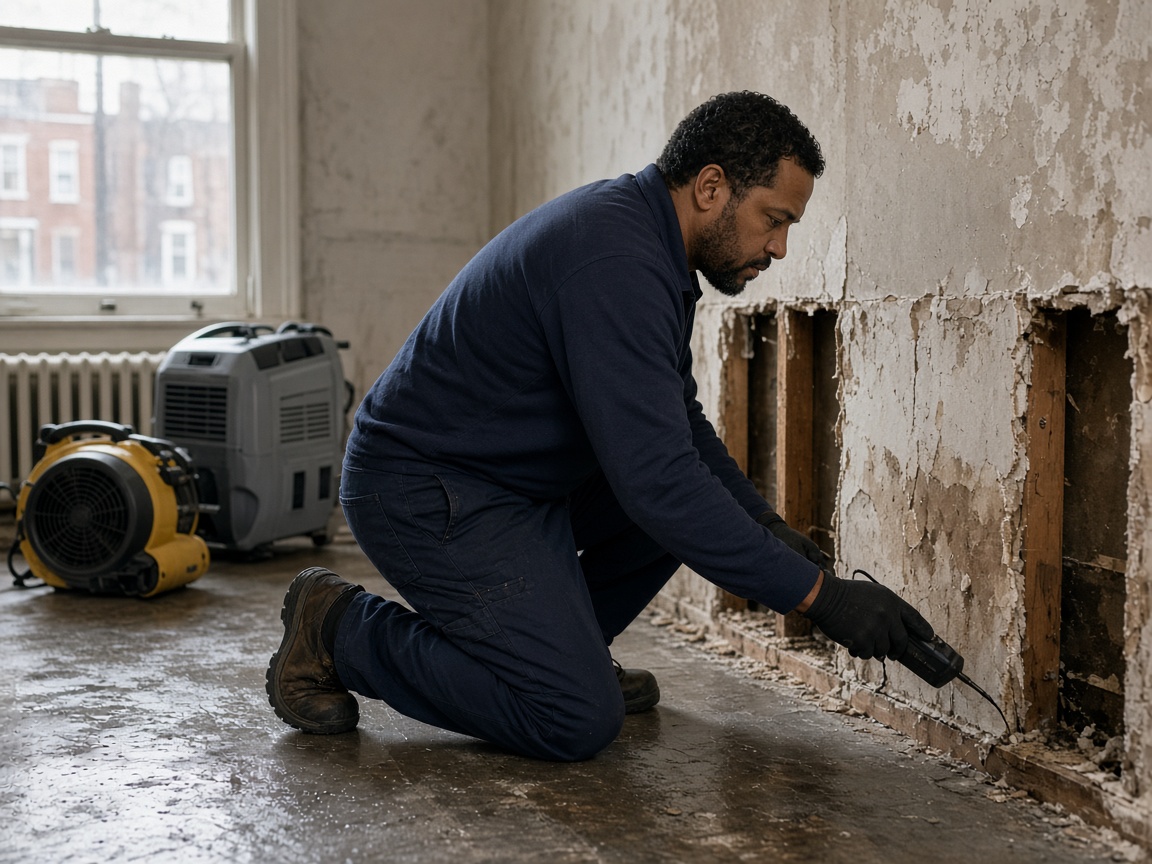
Summer humidity combined with sudden downpours can push water through cracked foundation walls on streets that slope toward the old rail line. Our technicians pull carpet and baseboard the same day, then set drying equipment that accounts for the thick plaster walls common in Orange homes. We return daily to check moisture readings until levels match the dry standard for the neighborhood.
East Orange borders us on the east and Elizabeth lies south, so traffic on South Orange Avenue can slow response if we hit rush hour. That is why we stage dehumidifiers and air movers on the truck before we leave Clinton Ave and why we confirm gate codes for any alley access behind Main Street properties.
Around Orange
We regularly work near:
- 📍Orange Park
- 📍Main Street
- 📍Orange High School
- 📍Lincoln Avenue
- 📍Orange Public Library
Water Damage Restoration in Orange — Local Notes
- •Orange housing stock from the 1910s-1930s often has cast-iron waste lines that crack where they meet the foundation, sending water into finished basements after heavy rain.
- •Winter temperatures below freezing frequently cause supply-line bursts in uninsulated crawl spaces under the older two-family homes along Highland Avenue.
- •Many lots lack modern French drains, so water pools against rear walls after storms; we place extraction ports through existing basement windows rather than cutting new openings.
- •Narrow driveways off Park Avenue require us to use 50-foot discharge hoses to reach the street storm drain without blocking neighbor access.